Friday, June 10, 2016

Mountain Laurel & Sheep Laurel Peak

Mountain Laurel
A Phenological Update: Late May into early June is clearly one of my most favorite seasons of the Shawangunks. This job has given me so many opporutnities to learn about the natural landscape here and I have been expanding my flora scope. Currently right now, we are experiencing the Laurel peak. Quarter-sized, umbrella looking, white, sticky flower blooms are opening up all over the Ridge. That flower is called Moutain Laurel. Kalmia latifolia is a broad-leaved evergreen shrub that has round flowers that come in dark shades of white to pink to even red/maroon. Although this plant is very poisonous, it is a great flower for many pollinators. Similar to the Blueberry, this plant really thrives in acidic soil (mostly 90% of the soil around here is acidic from the conglomerate). But right now, it is just in full bloom boom here. And a large popular attraction for the spring (similar to the fall foliage peak in the fall). If you have not been up here in the spring around this time before, you definitely need to add it to your bucket list. It is just beautiful and it smells nice too!

Some Pink Morphs
Not Mountain Laurel, but the tinier cousin, Sheep Laurel
Just as beuatiful!
So cute!

Wednesday, June 8, 2016

Skipping Work to the City

Christina's World by Andrew Wyeth
Deciding to take the day off, Marc and I travelled into the city this morning for the whole day. Later this evening, we were going to attend a production that his sister, Kim, was producing. So to get the most out of a trip to the city, it was time to explore! Knowing Marc and I, art and science is something we always like to get into during a traveling adventure. So with that, the MoMa and the Museum of Natural History were on out daily bucket list. My friend, Andrew, from my Ashland counseling days hooked us up with some free passes into the MoMa, the Museum of Metropolitan Art. It is so surprising that I have never been to the MoMa before! It was just filled with so many of my favorite artists and pieces! I felt like such a tourist, taking photos of every piece of artwork and getting photos of me with all of them too! After lunch, we moved on over to the Museum of Natural History for the second time! We had visited the M of NH a few months prior but never finished getting through it all. So we had to go back and finish where we left off. The one disappointment was that both times now, the great ocean room was blocked off to a wedding or reception of some sort, so we were unable to fully look at all the exhibits. I guess we need to go back again, not that I am complaining. After dinner, we attended the play called "Denmark" written by Matthew Grasda, produced by Marc's sister, Kim. It was a very intimate gathering of a small cast about a whole variety of deep emotion and relations among members of a family and a love affair. It was definitely a deep, dark, multiple-themed production; and very well executed. Feel free to check out the description of it here. It was pretty cool to watch and was super proud of Kim and how she helped fundraise and get this out into the public.

TheChristyBel

Go See Denmark!
The Starry Night by Vincent Van Gogh
One: Number 31, 1950 by Jackson Pollock
Squid Heads!

Monday, June 6, 2016

Perks of Being a Teacher

This morning I received a huge envelope in my mailbox. To my surprise it was a "Thank You" poster from my Pond Keepers and Forest & Stream - Ms. Carubia's 3rd Grade Class from Kerhonkson Elementary. They were totally adorable, a little crazy, but overall excited to be outside and getting their hands dirty! Getting gifts is definitely a perk of being an educator, even if you are not with these students everyday. This gift really made my morning!

TheChristyBel

The Special Perks of Working with Little Ones

Saturday, June 4, 2016

Upcycling Bar Stools

After seeing my upcycled arm chair, my friend, Wendy, convinced me to re-purpose two bar stools she was trying to sell at her yard sale. So I literally spent the entire day working on these stools in front of her customers. It was actually pretty cool when people would come up and ask questions about what I was doing. Not to mention, when I finished, the compliments I got and the bids! Unfortunately, no one bit on the chairs, so I got to take them home...for Free!

TheChristyBel

Wednesday, June 1, 2016

Ted Takes Over...The Bed

When work is hard, tiring, and stressful. Coming home and snuggling and cuddling up to the Ted, is just, the best remedy ever. I am just going to leave these here. Enjoy! 

TheChristyBel

"Just Love Me"
Cuds!
There is no such thing as personal space for the Ted!
Sleepy Kitty
This is how he sleeps...all the time.
Or like this...on top of us.
Even when we make the bed, it is still his.

He Loves Kitty I Have Had Since I was a Babe!
Yes, I still have it. Do not judge!

And you can never be mad
Just look at that face!


He takes over the bed when you're sleeping...

He takes over your arms...
And you can never be mad
Just look at that face!

A Remarkable Prehistoric Find

Trilobite!
Fingertip Tiny!
After getting a geologic hint from two of my volunteers, I had to adventure and find this prehistoric discovery. I cannot tell you where it is, but among all the conglomerate, there was a limestone erratic that had a tiny TRILOBITE!!!! Check this out!

I was beside myself excited!

TheChristyBel

Mossy Head

Look who decided to pay us an upclose and personal visit during my 3rd grade Pond Study program at Duck Pond today! None other than our infamous friend, Mossy Head! This Common Snapping Turtle has to be the size of the seat of an office, swirly desk chair! Whenever it comes up close, I get super nervous with our students checking it out, but they always keep a good distance and Mossy Head never really gets too close. 

#RespectWildlife from a good distance!

TheChristyBel

Mossy Head Visits!

Friday, May 27, 2016

Pink Lady Slippers

Pink Lady Slippers

Looks Like:  A large, showy wildflower of the Orchid Family. It has two opposite basal leaves and a large flower at the end of an erect stalk. The flower can be magenta to white-pink. The plant can grow 6-15” in height.

First Emergence on the Preserve - May 12
Lives In:  A variety of habitats and can be found in hardwood, coniferous forests of pine and hemlock. They also can be found on rocky and mossy slopes (similar to much of the habitat found on the Shawangunk Ridge). Pink Lady Slippers prefer to grow in areas of disturbance in these forests.

Niche:  In order to survive and reproduce, the Pink Lady Slipper needs to interact with a fungus in the soil in order to grow and bees in order to reproduce. The Orchid seeds do not have food supplies inside them like most seeds. The Pink Lady Slipper seeds require the threads of fungus to break open the seed and attach them to it. Once attached the fugue will pass on food and nutrients for growth and survival. When the plant is able to produce most of its own food, the fugue will extract nutrients from the orchid roots – a symbiotic or mutually beneficial relationship occurs. Pink Lady Slippers have closed flowers and only certain animals can enter and exit the small opening in the front. The bee is tricked into thinking the orchid holds nectar due to a sweet-smelling aroma the flower expels. As the bee tries to exit the flower, it gets covered in the flower’s pollen. If the bee gets tricked by another Pink Lady Slipper, it will deliver pollen from the first flower and help with the start of reproduction.

Also, White-Tailed Deer love this plant as a food source.

Threats:  Pink Lady Slippers can be found in the Shawangunk woodland areas, however, they take a very long time to grow. Picking these flowers is not recommended.

Frequency:  They are a common wildflower in the Shawangunks. 

Reproduction:  Flowers in early to Mid-May into July.

Fun Fact:  Another common name for the Pink Lady Slipper is the Moccasin Flower as the flower looks like a shoe. The roots were used as a remedy for nervousness, tooth pain, and muscle spasms.

And on a RARE occasion, you get a double Pink Lady Slipper! Found by one of my volunteers, this was an amazing find!
They look like a pair of Ballet Shoes!

Saturday, May 21, 2016

High Peterskill Hike

Hiked along the High Peterskill Trail that connects the Preserve to Minnewaska State Park today. I am just loving the spring right now and discovering all the different flowers that give the Ridge its color! Check out some of my favorite flora finds!

TheChristyBel

Bellwort
Star Flower
Painted Trillium

Friday, May 20, 2016

American Kestrel Banding

Mohonk Preserve, Research Associate, Zach Smith
retrieving the chicks from the Kestrel Box.
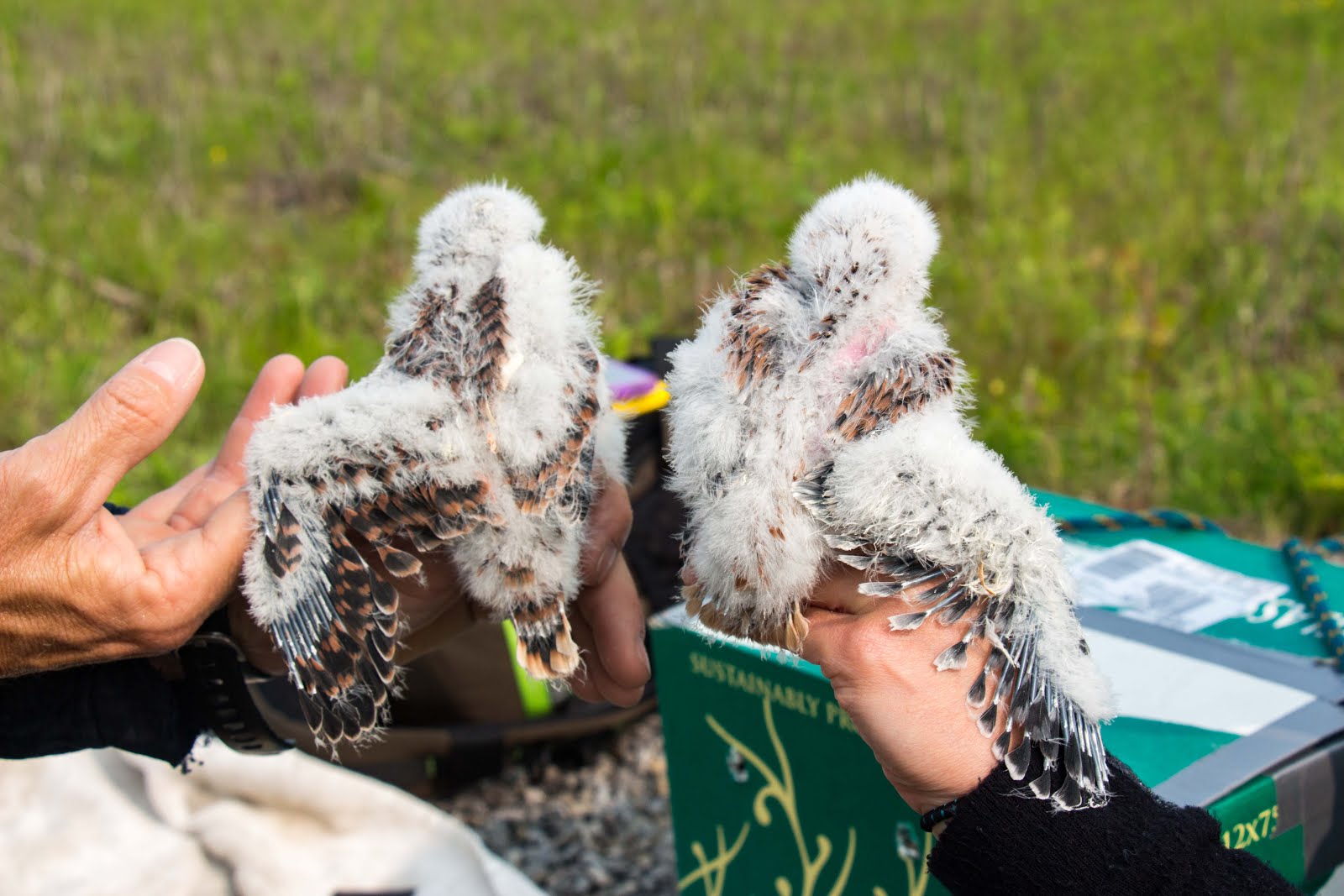
I am super proud to be part of two departments with the Preserve. Yes, it is really challenging at times and it's hard to balance my time and make sure I am completing all of my responsibilities, but...there are so many benefits. Benefits include using the Mohonk Mountain House, the Mountain House Spa and Lake, getting full access to hike, bike, and climb all carriage roads and cliffs, meeting some really cool people - Jimmy Chin, Mikey Schaeffer, Sasha DiGuilian, etc! But one really exciting thing is assisting our Research Associates! Research Associates submit proposals requesting to lead research projects on the Preserve that align with our mission. Below are some photos of assisting Zach Smith with Kestrel Bird Banding. He waits until the chicks are 3-4 weeks old, takes them from their Kestrel Box, sexes them, weighs them, measures the tarsus, and then finally bands them. Enjoy the balls of fluff! Not going to lie, I did squee with joy. And totally said, "I can't take it, they're so fluffy!"

In the Shawangunks Grassland Kestrel Box, Zach retrieved 6 chicks (4 females and 2 males)


American Kestrel

Weighing Each Chick - They Were Not Happy
Looks Like:  A colorful bird of prey with long, sickle-shaped wings and long tail. The Kestrel has markings on its head called “eyespots”. The two dark marks on the back of its head to fool its prey and other animals into thinking that the Kestrel can still see them even with its back turned. Male American Kestrels have slate-blue wings, white underparts, and rufous backs and tails with black tips, while female American Kestrels have cream-colored underparts and are rufous in coloration on their wings, backs, and tails.

Lives In:  These tiny falcons prefer open grasslands, meadows, and deserts. As you drive on roads, you can commonly find American Kestrels perched on telephone wires in search for prey.

Wahhhh! They were really not happy!
Niche:  The American Kestrel eats a variety of prey – including many insects (grasshoppers, beetles, cicadas, and spiders) to small snakes, lizards, and frogs, to small rodents and other birds (voles, mice, and red squirrels). Kestrels also become prey for larger birds such as Red-tailed Hawks, Barn Owls, and American Crows.

Threats:  Breeding habitat has declined for Kestrels due to thinning and clearing of land and standing dead trees. In addition to breeding habitat declination, the American Kestrel population is declining due to the loss hunting habitat. “Clean” farming practices such as the removal of unwanted hedges, trees, bushes, etc. reduce shelter for prey sources.


Measuring the tarsus
Frequency:  Even though this raptor is a common widespread falcon throughout our country, the American Kestrel population is declining due to human encroachment into the natural world.

Reproduction:  American Kestrels do not build their own nests. They will nest in pre-existing holes or cavities in trees that were made by other birds or use nest boxes that have been built by humans. Kestrels will use the same territory to nest in year after year. During courtship, the pair will perform aerial displays, a series of sequential dives in the air. The female will create a nest called a “scrape.” A scrape is a small depression in the substrate on the floor of the cavity or nest box. The female can lay up to four to six eggs in a clutch. The eggs will be incubated for about 30 days predominantly by the female while the male hunts and brings in food. When the eggs hatch, they are tiny balls of white down and fluff. After two weeks once hatched, the chicks begin to develop their flight feathers and the symbolic colors of an adult Kestrel. They will begin to fledge 30 days after hatching.

Female (left), Male (right)
Females are pretty rufous on entire wing,
Males have a blue, gray slate color wing
Fun Fact:  The American Kestrel is our most colorful and smallest falcon in North America. Their size is comparable to a Mourning Dove or a Blue Jay.

TheChristyBel

Getting to Hold a Baby Kestrel
My Life was Complete!